
 “The Driver” (1978)
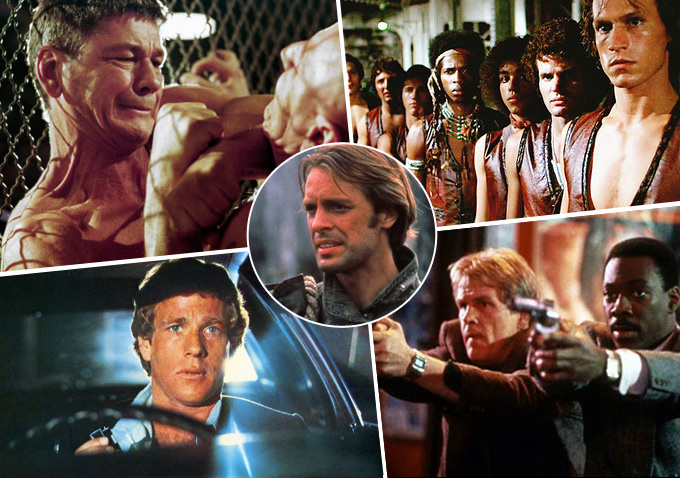
Hill once commented that every movie he ever made was a Western, even when it’s not evident on the surface. He was quoted as saying that he sets his films in “a stripped down moral universe that is, whatever the dramatic problems are, beyond the normal avenues of social control…of the problem, and I like to do that even within contemporary stories.” And that’s very much true with “The Driver,” his second film. A low-key existential action classic that really saw the filmmaker come into his own, it sees a nameless Driver (Ryan O’Neal), who makes his living in the getaway business, going head to head with The Detective (Bruce Dern), who’s determined to bring him down, even if he has to entrap him with a bank robbery to do so, while Isabelle Adjani is The Player who comes between them. Its influence on Nicholas Winding Refn‘s 2011 film “Drive” has been well noted, but its DNA can be found earlier. For instance, it’s hard to imagine Michael Mann‘s career being the same without Hill’s examination of two icy professionals on either side of the law, while Quentin Tarantino has nodded to “The Driver” more than once in his work. It’s undoubtedly stylized fare, right down to the hard-boiled dialogue, and Hill impresses with intense, never overblown car chases that are still among the finest ever made (arguably topping those in Sam Peckinpah‘s “The Getaway“). The spareness of the script—influenced by Jean-Pierre Melville and “Le Samourai” in particular—can be a touch alienating, especially for modern audiences used to more coddling from their thrillers, but we’d say that it remains Hill’s best film.
“The Warriors” (1979)
If “Hard Times” and “The Driver” displayed Hill’s debt to people like Peckinpah and the French New Wave, his third film (and first real cult hit) “The Warriors” showed that he could blend these things with a populist, almost comic-book sensibility, and it confirmed him as one of the most talented action directors around. Set in an ostensibly present-day New York that’s closer to a post-apocalyptic wasteland than the Big Apple, the film follows the titular gang—including Michael Beck‘s Swan, James Remar‘s Ajax, Terry Michos‘ Vermin, Marcelino Sanchez‘s Rembrandt and David Harris‘ Cochise—who are called to a meeting of all the New York gangs in Van Cortland’s Park, proposing a truce, only for their leader Cyrus (Roger Hill) to be framed for the murder of the leader of the Gramercy Riffs. The rest of the Warriors escape and try to head back to safer territory, but the leader of the Rogues, Luther (David Patrick Kelly), puts a hit on them, making them a target of every gang in the city. It’s, as you might expect from Hill, relatively spare and lean (the plot is, essentially, “go from point A to point B”), but he creates a rich world to play in, one that one suspects bears little relation to the real world at the time, but also feels shot through with the disco/punk/early hip-hop spirit of 1970s NYC. And Hill has a tremendous feel for the iconic, summoning up not just comic books, but also the Greek legend Anabasis, something hammered home in the recent director’s cut, which adds graphic-art bridging sequences and a new intro to really emphasize the film’s place as pop art. If some of the cast are a little patchy acting-wise, it’s made up for by the keen eye for physicality in picking them out, and by the rock’n’roll energy Hill brings to his direction. A middling success on release, it has matured over time into one of the most reliably entertaining midnight movies around.
“The Long Riders” (1980)
While not the most famous or remembered version of the Jesse James gang story, Walter Hill’s take on the tale is still engaging and distinctive. And many forget it was accepted to play in Competition at the Cannes Film Festival, perhaps because of its clear-cut rhythms, both more languid in pace, but explosive in its use of balletic, slo-motion violence not unlike the films of Sam Peckinpah. In fact, Peckinpah would have approved, as his spirit is all over the Western though Hill never subsumes his own identity. And it’s a movie driven by brotherhood and the bonds of family. No, really. Real life brothers James and Stacy Keach play Jesse and Frank James, David, Keith and Robert Carradine play the Younger brothers, Dennis and Randy Quaid are the outlaw Miller siblings and Christopher and Nicolas Guest take on the roles of Robert and Charley Ford. Featuring an idiosyncratic original score by Ry Cooder (not afraid to use anachronistic elements like the electric guitar, which also distinguishes it from the pack), the movie has a melancholy tinge as if to suggest these halcyon days outside the law cannot last. The Civil War-era set movie lends a sympathetic ear to the outlaws even as they rob banks and kill, framing them as outsiders who just want to be left alone and on the fringes of society. And yet as it depicts the mythos of these riders, family men who just want a piece of their own, it’s unsentimental as men live and die by the moral codes they choose to follow. Forgotten upon the time of its release (the critical drubbing of “Heaven’s Gate” a few weeks earlier didn’t help), it’s not the fastest draw in the West, but that’s hardly the laconically beautiful point.

