

10. “Anomalisa”
Charlie Kaufman might just be making the same film over and over again: protagonists wracked by deep existential crisis that force them to question their place in the universe and the point of it all. But with the animated “Anomalisa,” both bizarre and very tender and human, co-directed by Duke Johnson, Kaufman proves there are a million ways to skin the same cat with deep wells of emotion and ironic, dark laughs. Kaufman takes a sad and skewering look at the hospitality industry from both sides — the monotonous and ultimately depressing drone of manufactured smiles and obligated cordiality, and the deadening reversal of being on the receiving end of soulless accommodation. This alienating milieu is the brilliant and often hilarious stage for the crippling crisis of the movie’s protagonist Michael Stone (voiced by David Thewlis) a customer service guru scheduled to speak at a convention for fellow professionals in the anonymous purgatory of Cincinnati. Desperate, and unable to connect on any level, Stone finds perhaps a oasis of hope in Lisa (Jennifer Jason Leigh), a shy and self-defeating woman. Their affair, and Stone’s hotel nightmare, is both hellishly mundane and hysterical, while achingly dolorous and melancholic. You’ve nothing like this cinema, let alone animation, and its a deliriously dark and yet soulful trip worth taking. [My Telluride review]
9. “Mistress America”
Noah Baumbach explores the dark side of ambition in his hilarious “Mistress America,” which sends up both millennial entitlement and false thirty-something, “I’ve finally got it figured out” wisdom. Pound-for-pound it might have the best witty lines of dialogue in any Baumbach film and both its leads, Greta Gerwig and Lola Kirke,are comedic revelations. Stylistically the film is a lot of fun, mixing a John Hughes ‘80s tenor with the screwball comedies of Peter Bogdanovich and the mini-sub-genre of things going awry throughout the five boroughs of New York (see “After Hours,” “Something Wild,” etc.). Co-written by Gerwig, who does her best modern update on the elastic energy of Carol Lombard, “Mistress America” also has a lot on its mind. The comedy thoughtfully examines the complex dynamics of sisterhood and the casualties of war when making art from personal experiences, all the while never losing its charms or sense of sharp humor. Delightfully observant and fleet-footed, the pillowy synth score by Dean & Britta gives it that extra little edge into greatness; the character’s dreams and aspirations mirror that excited, first-time-in-New-York sensation of walking on air. [My review from Sundance]
8. “Mustang”
It’s always lovely to discover new voices from all over the globe, and French-Turkish filmmaker Deniz Gamze Ergüven’s “Mustang” was another terrific directorial debut. Much has been made of the expressive, teenage-girl-centric film being indebted to Sofia Coppola, and while it’s a compliment, it’s almost giving short thrift to Ergüven’s own distinctive voice. Granted, there are surface similarities, “Mustang” centers on five teenage girls, much like “The Virgin Suicides,” but the similarities mostly end there. Coppola’s movies, even “Marie Antoinette,” usually center on adolescent alienation and disaffection, and “Mustang” is really about a loss of innocence due to the rigid patriarchal society in Turkey. “Mustang” focuses on the struggle for voice, identity, and choice through the bonds of sisterhood — each girl has to watch another sibling get married off to another man she doesn’t know and doesn’t want. And worse, most of them aren’t ready for adult life yet — they’re still discovering who they are human beings, let alone ready to be married. Quietly feminist without hammering it home, Ergüven paints a regrettable yet evocative world where female liberty hasn’t fully broken through yet, but poignantly points to a horizon of hope beyond outdated cultural modes of thinking. [Jess’ review from the Fortnight section in Cannes]
7. “Steve Jobs”
It didn’t connect in wide release, but I unapologetically loved the fierce velocity of the Aaron Sorkin-penned, Danny Boyle-helmed “Steve Jobs.” I’ve never been a huge Sorkin acolyte, but the rapid-fire, rat-a-tat frisson of ideas was a delight. And witnessing Michael Fassbender’s hyper-intelligent Jobs juggling three conversations and thoughts at once, fired back with frisbee-to-the-forehead accuracy, delivered such terrific bolts of engrossing lightning. Audaciously (and brilliantly) told — unconventionally crafted, three product launches stand-in for the rise, fall, and reclamation beats of the Apple impresario’s professional narrative and dovetail with his personal story — it was easy to hang off every word spoken by this tour de force troupe of performers (Fassbender is typically tremendous, but so are Jeff Daniels, Kate Winslet, Seth Rogen, et al). An unvarnished look at the unrelenting vision, megalomania, and restlessness of Steve Jobs — the face-off between Jobs and John Scully might be my favorite “action scene” of 2015 — the knock on the film is that Sorkin’s script is really the only thing that works, but the truth it’s Danny Boyle’s most gracefully directed movie and channels the inherent kineticism and never tries to form its own. While Sorkin is the star player, the first violin chair, every story needs a conductor to guide the orchestra. It’s Boyle artful direction of the narrative’s operatic qualities that makes for a complementary symphony about the cost of genius. [My review from Telluride]
6. “Lil’ Quinquin”
We talk about enfant terribles we love to hate and hate to love like Gaspar Noe, Harmony Korine, Lars Von Trier, and Micheal Haneke, but austere French provocateur Bruno Dumont is generally so self-serious, unpleasant, and divisive, he drove away such a comparable audience arguably before they could even ever cotton to his uncompromising and caustic rigor. Such a pleasant delight then is “Lil’ Quinquin,” Dumont’s TV mini-series/five-hour murder mystery set in an idyllic coastal French town. Part detective story — replete with an inept Inspector Clouseau figure played by the hilarious twitch-faced, non-actor Bernard Pruvost — part comical farce, but also dark existential drama, “Lil’ Quinquin” chronicles the life of a young rapscallion, the titular Lil’ Quinquin (Alane Delhaye), while the local bumbling keystone cops try and solve the mystery of who is stuffing human body parts into dead livestock. It’s as grim and funny as it sounds, occasionally laugh-out-loud hilarious and other times unsettlingly grisly and bleak. Dumont’s ultimately enigmatic film comments on the absurd, inscrutable nature of horrific violence and that insidious, unknowable evils can be found in even the most seemingly tranquil places. [Nik’s review from Cannes 2014]
5. “Carol”
2015 was the year filmmaker Todd Haynes rightfully ascended to his spot as one of the top-tier American directors, and having admired his work since the beginning, I couldn’t have been happier to see it (and to some degree because his HBO mini-series “Mildred Pierce” was just as good, but didn’t get the same rapturous ink, sadly). Adapting Patricia Highsmith’s lesbian love tale, it occurs to me that the crime of the movie, Highsmith’s forte, is the forbidden love itself, and the punishment is the aching secret, off-limits desire the two women must discreetly dance around and struggle with. Full of coded, surreptitious, and delicate glances and gestures, “Carol” is as immaculately performed as it is crafted. There’s much talk about “who’s the lead” of the movie, Cate Blanchett or Rooney Mara, but the reality is on top of its impeccable craft (god, the beautiful score and cinematography; there’s not enough words), “Carol” pulls off a subtle and graceful point of view baton pass shifting in line directly with the vulnerability and dynamics of power in this relationship. To be honest, I find the film ever so aloof and distant though; all those frosted panes of glass being a little bit much. And if it had landed an emotional gut punch like I wanted, I feel like the movie would easily be number one on this list. But such is the formidability of Haynes film — aesthetically dispassionate and removed, but still drawing you in magnetically. [Jess’ review from Cannes]
4. “Spotlight”
A near-perfect film from writer/director (and actor) Tom McCarthy, if there was a consensus vote for the Academy and critics about what film should take Best Picture, it would surely be “Spotlight,” and deservedly so. Perhaps the definition of unshowy, subtle, get-in-there-do-the-job filmmaking — and therefore a little unsexy in some corners of the film world — “Spotlight” is a fantastically crafted workhorse of tone, tension, and control that rolls up its sleeves, puts in the hours, and never relents. About the Boston Globe reporters who uncovered the sexual abuse conspiracy in the Boston Catholic Church, “Spotlight” quietly acts as a love letter to the heroism of investigative journalism, but always resists the temptation to ever lionize its reporters. The restrained ensemble cast is terrific, too. Actors like Michael Keaton and Rachel McAdams put in realistic, unobtrusive performances, but an additional treat is to see how deep and amazing its supporting cast is too. Liev Schrieber, Stanley Tucci, Brian d’Arcy James,and Billy Crudup all deliver incredibly nuanced and subdued turns. If there was an Oscar for Best Ensemble, “Spotlight” would win it hands down. I guess, Best Picture will have to do. [Jess’ review from Venice]
3. “Sicario”
The problem with pervasive feminism in cinema is… well, absolutely nothing. Just look at the movies on this list; 2015 was a fantastic year for female protagonists. But a feminist viewpoint may have misunderstood Denis Villeneuve’s hauntingly crafted “Sicario.” Many lament that Emily Blunt’s capable FBI character Kate Macer lacks agency and is a patsy in this story about the American intelligence inter-office war on drugs in the blackened cartel lands of Mexico. But that’s kind of the point. The gloomy “Sicario” is about the terror of powerlessness, a lack of control, and the futility that comes from fighting an unwinnable war, and that’s communicated almost relentlessly with its aesthetic despair. Mercer is steadfast in her value system, but is forced to watch brutal and sickening compromises every step of the way until it’s all too late. Morally bruising, “Sicario” subverts all your expectations: it defies the notion of the kick-ass lead (male or female), the audience who expects the hero to right wrongs, it gives egalitarian space to its protagonist’s fall from grace, and it acts like a film noir — Mercer’s strength of idealism and sense of justice is also ultimately her undoing. Multi-layered and tragic, “Sicario” isn’t unlike many classic film noirs where the detective goes down a dark trail and is ultimately undone by a path they thought they could handle. But Villeneuve’s bleak and viscerally stressful movie, shot with glorious, anxiety-riddled control by Roger Deakins and imbued with distressing dread by Johann Johansson, is about peering into the darkness of what shouldn’t be seen. In Blunt’s case, it’s witnessing the horrors of how the government and the laws she swore to uphold are perverted beyond recognition in the name of quote unquote justice. She discovers, much to her shock in the end, she hasn’t got the stomach for this merciless milieu, but that’s less a comment on her feminine strength as it is a testament to her idealistic values — Blunt’s a virtuous lion, but cartel land is only for the most heartless jackals. It’s her “Chinatown.” Moreover, “Sicario” is just breathless, muscular, powerhouse filmmaking that will make the likes of David Fincher blush. There’s a reason someone like Villeneuve has been handpicked to helm the new “Blade Runner” film, and the pulse-pounding intensity and panicky heart of darkness doom of “Sicario” is exactly why. [Jess’ review from Cannes]
2. “Brooklyn”
A gentle movie about inherently good people, little conflicts, zero antagonists, and a fairly uncertain and passive protagonist: on paper “Brooklyn” should not only not work, and it’s amazing it got made at all. But this is the beauty of the soft and humane persuasions in this classically composed and sincere drama. Defying nearly every screenplay convention, John Crowley’s tender adaptation of Colm Tobin’s Irish immigration novel (adapted by Nick Hornby on the page) is a elegant and special little gem. On the surface it’s about choosing between two men, another layer deep it’s about the throbbing pang of homesickness and the alienations felt from losing our warm sense of familiar comforts and spiritual equilibrium (no one likes their life upended). But really, “Brooklyn” centers on identity and our yearnings to understand who we are and what our place is in the world. It does so through our nostalgic relationship to the ever-changing notion of what we define as home. Featuring Saoirse Ronan in an outstanding, career-making performance as a Eilis Lacey, a young Irish immigrant trying to navigate her way through 1950s Brooklyn, she has left behind a past life — the innocence of her youth in Ireland. In her present is her unfamiliar and uneasy life in Brooklyn. Love, circumstance, and fate intervene, and Eilis is gently pushed into the future, but not before saying goodbye to her youth, family, and innocence. Impeccably put together, gorgeously shot by Yves Bélanger,and featuring a wistful score full of longing by Michael Brook, on top of being emotionally rich, “Brooklyn” is also affectionately crafted and exquisitely detailed. Heartbreakingly bittersweet, “Brooklyn” is lovely and sweet, but it’s emotional punch comes from its astute recognition of how we grieve for the departed fragments of our lives we can never return to. [Our review]
1. “45 Years”
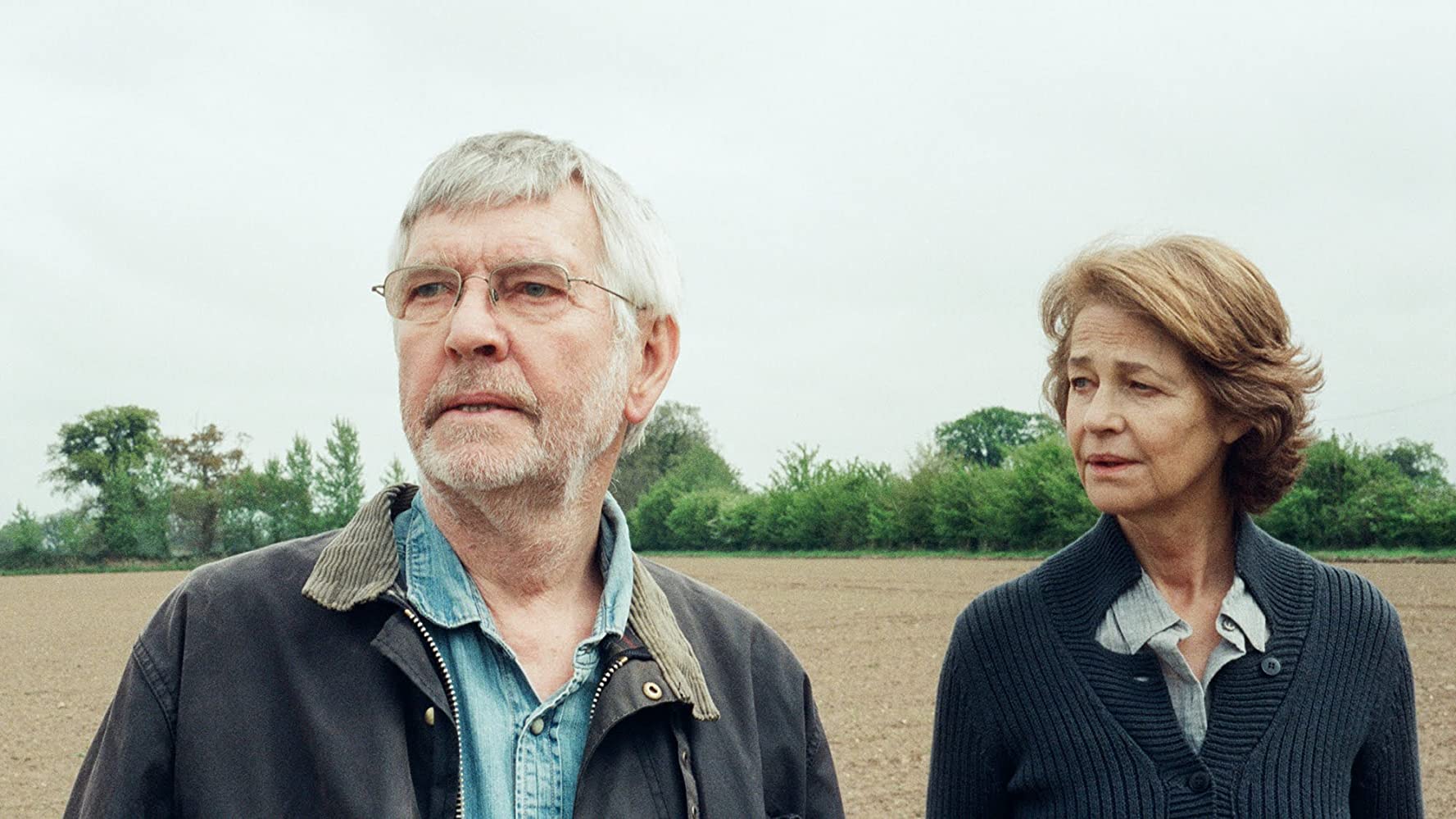
Have you felt it? There has been an awakening. OK, that’s not a line of dialogue from Andrew Haigh’s brilliant “45 Years,” but perhaps it’s apropos for a film about a crack in the past that disrupts the seemingly tranquil life of an elderly couple about to celebrate their 45th wedding anniversary and wakes them up to the lie that has shaped their lives. 2015 was the year of the immaculately crafted drama, emotional and human and so delicately drawn (see “Brooklyn” and “Carol”), but Haigh(“Weekend”) stepped up like no other with his mature, patient, and devastating sophomore effort. Emotionally rich and incredibly well-observed, “45 Years” is also brilliantly constructed on a narrative level. An unexpected letter arrives and changes everything, or really, shatters an illusion. Geoff Mercer (Tom Courtenay) discovers that the body of his former fiancée, who died in a Swiss Alps mounting climbing accident some 50 years ago, has been found perfectly preserved in ice. This unlocks a tsunami of dormant memories in Geoff and puts him into a soft, but discernible tailspin he tries to hide. Meanwhile, as his wife, Kate (an astonishing Charlotte Rampling in what is the best performance of the year), learns more about this former flame, and what she truly meant to Geoff, she recognizes it as a ghost that haunts their marriage and begins to believe she’s lead a life of second best. There are horror film qualities to the movie too — imagine you’ve learned your entire sense of false bliss has been built upon a lie. All the while the movie works as a thriller, a time bomb ticking down to the day of their anniversary that takes place five days from the day of discovery from this literally once-frozen-memory in time. Beyond the perfect metaphors, the subtle borrowing of genre and ace architecture of story, “45 Years” is just so wounding. A symphony of gut-wrenching emotions plays on Rampling’s face and behind her eyes and in its very English manner, the movie charts the taciturn sentiments we as people cannot express or articulate. Heartbreaking to its core, “45 Years” is about the damage done. Haigh’s film posits that we keep secrets from the ones we love the most, but the price of those emotional revelations and betrayals are irreparably devastating. [Jess’ review from Berlin]

