

“Mona Lisa and the Blood Moon”
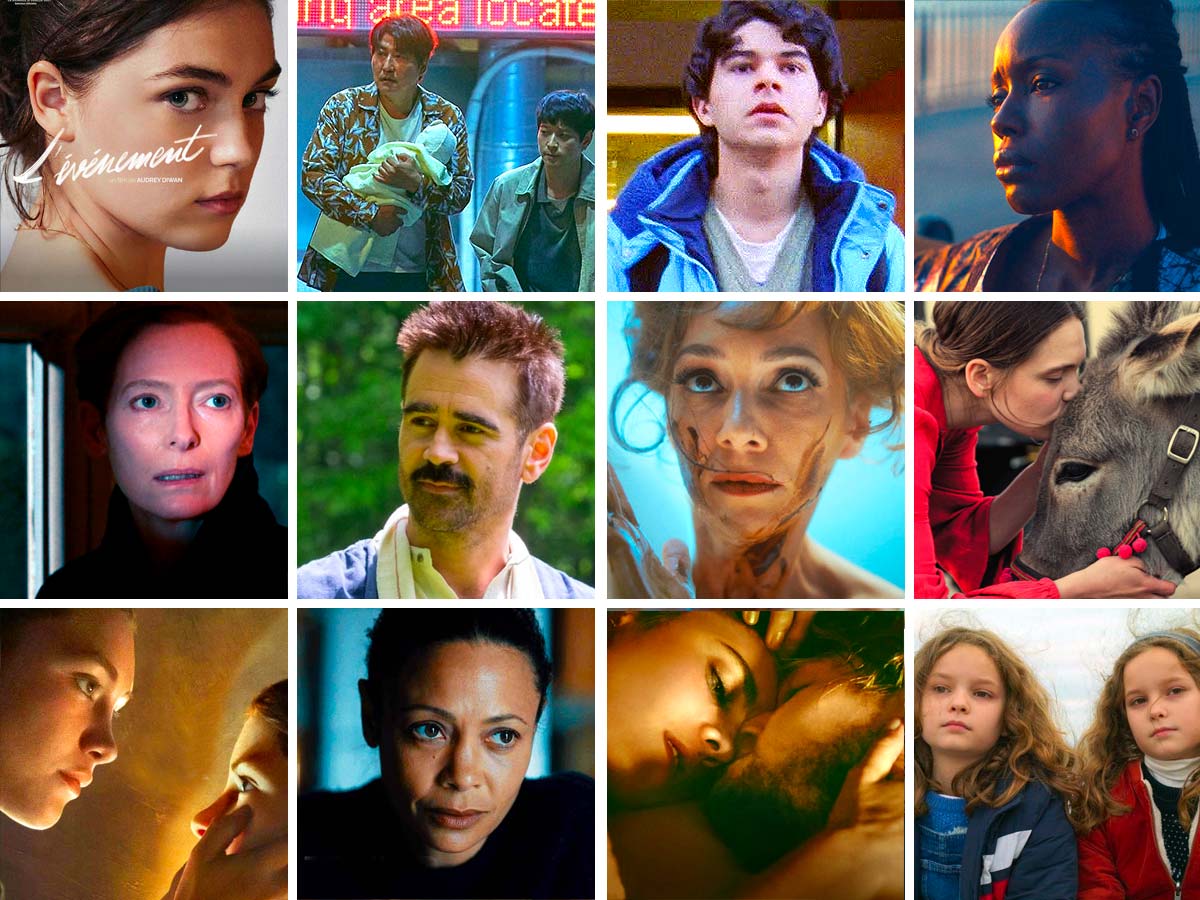
As we all know, there have been several failed, reductive Quentin Tarantino rip-off types over the decades. His true successor may be Ana Lily Amirpour, whose DJ-David Lynch style roared on screen with her masterpiece, “A Girl Walks Home Alone At Night.” Creatively crafting a werewolf origin story as a companion piece to her B&W vampire debut, “Mona Lisa and the Blood Moon” casts “Burning’s” Jun Jong-seo as Mona Lisa Lee, who begins the movie wrapped in a straightjacket inside a New Orleans mental institution, psychokinetic powers manifesting when a full moon blooms. We never learn her backstory, and that’s part of the appeal (Amirpour has hinted at a sequel that would flashback to it, speaking of QT). Mona Lisa soon crosses paths with a single-mom stripper, played by Kate Hudson (if you thought she was great in “Glass Onion,” she’s even more impressive here, almost giving off Jennifer Lopez in “Hustlers” vibes), who sees an opportunity to combine her new friend’s mind control powers with the sex work trade she exploits her living off of. As with her previous work, comeuppance of some kind is most certainly inevitable. Also featuring Ed Skrien and Craig Robinson (as the cop, hot on the escapee’s trail), ‘Mona Lisa’ is a brilliant melding of b-movie genre pulp and pitch-perfect needle drops. No one makes movies like Amirpour – shooting from the hip in a give no fucks fashion like no other cinematic artist working, not even Tarantino. – AB [Our review]
“In Front Of Your Face”/“The Novelist’s Film”
Considering he released *checks notes* four films in the U.S. in 2022, one can be easily forgiven for being unsure which year any given Hong Sang-soo film was technically in theaters. Playful and poignant, pointed and pedantic, “In Front Of Your Face” is Hong’s most colorfully saturated film in some time, opening with one of the most striking dolly/zooms in cinematic memory. Starring Lee Hye-young as a former actress returning home to see her sister (Jo Yoon-hee), their relationship long ago stained (a metaphor for life Hong extends in the second half). Simply structured as a diptych like many of his films, not a single male character is featured until Part II of the picture, when Hong mainstay Kwon Hae-hyo pops up as a (you guessed it!) acclaimed director, longing to work with Lee one last time. “They were very nice. Like short stories,” she tells him about his work – like the filmmaker’s very own movies themselves, more difficult to divorce from each other the deeper he dives into personal revelations coming into focus. Aiming to capture the importance of living in the now before time spent together is lost to us all, “In Front Of Your Face” feels slight at the start, yet quietly reveals itself as one of Hong’s finest. [Our Review]
“The Novelist’s Film,” however —which will likely go down as top-tier Hong in the minds of most die-hard Hong-heads — was this writer’s personal favorite of his 2022 releases. A clear commentary on the evolution of his collaborative relationship with actor and now filmmaking partner Kim Min-hee (who stars as a not-so-veiled version of herself in the movie), the film follows Jun-hee, a (again, you probably guessed it) novelist (Lee Hye-young) who finds herself caught ping-ponging between old friends, new acquaintances, and personal idols, all in the span of a day. Taking a stroll through the park with another (possibly the same) director character, played by Kwon Hae-hyo, Jun-Hee bumps into Kim’s character, who happens to be her favorite actress, and inspiration strikes. She hasn’t published anything in a while, but she’d love to try her hand at a short film. As narratively compact yet deeply meaningful as his greatest works, “The Novelist’s Film” is certifiably all the more richer the more personally invested one is in the author’s touching progression and transformation as an autofiction artist, but it’s also just a lovely picture that stands on its own. – AB [Our Review]
“Free Chol Soo Lee”
Directed by Julie Ha and Eugene Yi, “Free Chol Soo Lee” is an unflinching look at a falsely incarcerated man’s odyssey to prove his innocence. Charged with first-degree murder at the age of 23 and arrested for shooting a gang member in the back at point-blank range. In fact, the shooter’s race was misidentified. Weaving together archival footage, interviews, and excerpts from Lee’s own written accounts, the documentary is not only a resolute excavation of anti-Asian hate but also a look into how San Francisco’s poverty-stricken Chinatown was a boiling pot for protest and rally movements across California, eventually resulting in a growth of pan-Asian American activism. Much like the series “Warrior” powerfully illustrates, racism arising from survivalist street crime can lead to a divide between tribal factions, one eventually fueled by hate in the face of supposed self-preservation. The doc reveals not only the traumatic impact the legal case had on Lee (though it does tackle this element) but how the prejudicial situation made him a prominent figurehead, at least for a time. As we put it following its Sundance premiere: “the movie shows the overall effects of a system indifferent to people who fall through its cracks,” an issue San Francisco and the world at large still reckon with. – Andrew Bundy [Read Our Review]
“Petit Maman”
Through no fault of their own, filmmakers often struggle to follow up a work as seismically impactful as Celina Sciamma’s “Portrait of a Lady on Fire.” Sciamma was perhaps aware of this, and rather than attempt to outdo herself; the director reels artistic ambition back in order to prove a kind of cinematic micro-prowess, as opposed to another macro thesis. A wistful tale of time lost and childhood wonder, “Petit Maman” takes the idea of twin casting to a whole new astral plane, with sisters Joséphine & Gabrielle Sanz playing a mother and daughter who somehow transcend time, meeting at the same age in a small wooden fort, built in the woods. It sounds complex on the surface but is expressly effortless in its handling. As we wrote following its Berlin premiere: “In many ways, “Petite Maman” feels like a soft interlude of a film, far from the visual and thematic drama of “Portrait of a Lady on Fire” but never attempting to emulate or demand that kind of style.” It’s an astute observation that sums up precisely why Sciamma’s latest feels like such an achievement. – AB [Our Review]

