
 “In The Cut” (2003)
Frannie Avery, as played by Meg Ryan, is a high school English teacher that delves into a sexual odyssey in New York City. One of her more intriguing encounters is NYPD Homicide Detective Giovanni Malloy, a creepy Mark Ruffalo, who is, coincidentally or not, investigating the murder of a young woman. Two movies are happening during “In the Cut”: there’s a run-of-the-mill slasher film with all the usual predictable tropes, but, more intriguingly, it’s also a movie about the sexual needs of a mature woman. It’s all filmed in gorgeously darkened shades as a grimy film noir. The sex scenes between Meg Ryan and Mark Ruffalo are unusually sketched and shot. Campion is trying to deconstruct female taboos and cliches, and her film is always seen from a female point of view. The prototypical format we were used to at the movies was of man pursuing woman, seducing her, and getting his way by meeting his own needs and neglecting hers. That trope is deconstructed here. Campion and Ryan’s female gaze make the sex act not a “conquest” by man, but of a woman’s tough consciousness and the deliberate pursuit of her own sexual needs. She is in control at all times. For male viewers it might take some getting used to, in fact it feels damn near disturbing, but once you realize and accept what is going on, it fascinates, especially on repeat viewings – JR
“Bright Star” (2009)
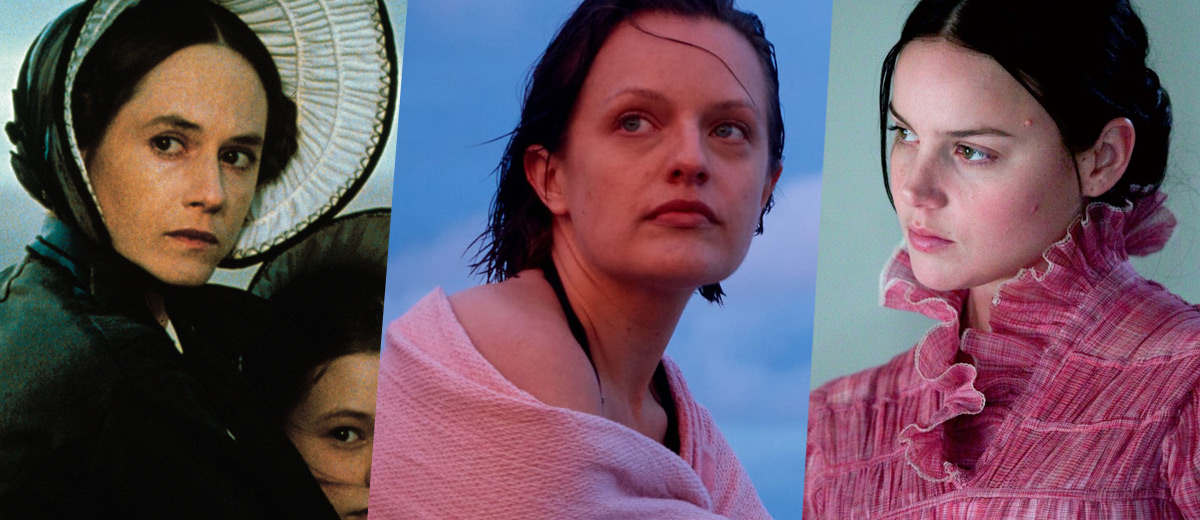
“Bright Star” is Jane Campion’s masterpiece in soulful storytelling. For all the chaste intimacy shared between the two leading characters, Ben Whishaw’s delicate John Keats and Abbie Cornish’s headstrong Fanny Brawne, the passion between them is electric, scorching the path behind them in their wake. Made up of small moments that mean grand things, we always know that theirs is a romance not meant to last. What Jane Campion does so brilliantly here is to make the audience feel the gravity of every fleeting moment. Breathtakingly shot and viscerally immersive, each frame looks like a watercolor painting, and when the wind bursts through Fanny’s shutter windows we feel it on our skin. A shock, perhaps, for a film that from the outset is so perfectly content in its silence, and yet the weight is present. “Bright Star” is a tragedy and a romance in one, packaged with an artistic integrity and vibrancy that would make Keats and Brawne proud. – Ally Johnson
“Top Of The Lake” (2013)
It had been a long four years after “Bright Star” waiting for Campion to return, but when “Top Of The Lake” finally came, it was obviously worth the wait. The seven-episode first season, which premiered at Sundance in a single seven-hour showing (there was a lunch break), is exactly the slow-burn sort of mystery we expected from the director: the twists and turns serving only to reveal and revel in the nuanced relationships at its core. Campion’s show weaves a complex, thoughtful set of narratives between an even more complex set of characters, each of whom is carefully drawn and beautifully realized. “Top Of The Lake” is packed with colorful, recognizable people that we all live among (with some obvious exceptions) struggling to do the right thing in a broken world, one where accidents define us as much as — if not more — than the choices we make. By its finale, Campion’s series has transformed into something grand and soulful, a moving exploration of the dynamics between strong, whole women and the toxic, masculine world they’re bucking against. And, while “Top Of The Lake” is by no means as gracious or damning as some of Campion’s other work, it is an achievement for its sense of harmony and for how badly it left us wanting this much-deserved second season. – Gary Garrison
“Top Of The Lake: China Girl”
As you’ve read above, the inaugural season of “Top Of The Lakes”— originally conceived as just a stand-alone mini-series—was terrific, the best thing Campion has made since… well, that last thing she made because the venerable filmmaker rarely, if ever, misses a step. In season two, the homicide detective Robin Griffin (Elisabeth Moss, superb again) is back in her native Australia (S1 takes place in New Zealand) devastated by the events of season one which we won’t spoil here. ‘China Girl’ is three pronged; Robin’s PTSD, a murder mystery launched by a dead prostitute found in a suitcase and the detective’s desire to finally meet and connect with the now-teenage girl she gave up for adoption as a young girl (played by Campion’s daughter Alice Englert). All three threads are connected, thematically and otherwise, but the strands are built on really contrived, even ridiculous suspension-breaking coincidences. Really? Really? This sets the unfortunate tone for a show that not only never finds its footing after this fundamentally frustrating narrative misstep, but continues to aggravate the audience with it 1) abusive, unwarranted punishment of Robin, 2) a gas-lighting, irritatingly irredeemable antagonist (you can’t write people like that, sorry; you need to give them some human dimension) 3) passive and openly accommodating characters that never act in their own best interest (argggh!). For the audience, “Top Of The Lake: China Girl” is like being trapped in an abusive relationship; it’s an emotionally manipulative show, that tries to excuse the exploitation of its characters in the name of drama. It simply asks too much of its audience and even causes resentment. We root for Robin and yet she is repeatedly brutalized. The brilliant character is put into scenarios she’s way too smart for and yet, because ‘TOTL’ needs to manufacture drama, she finds herself in these situations regardless. To that end, Elisabeth Moss is amazing and Robin is just as fearless as ever despite all the garbage that life (and this show) has put her through (also, is Australia the most misogynist country on earth? Cause Christ, this show). Our full-on review slightly more charitable than I am offering here —but ‘TOTL:CH’ is a bridge too far and the biggest misstep of Campion’s career. I’d blame it on the other director who helms most of season two (Ariel Kleiman), but the cinematic execution is good (it’s suitably moody, well shot, etc.), it’s the script (written by Campion and co-creator Gerard Lee) that’s profoundly bogus. Jane Campion is our hero, but with ‘China Girl’ she’s inadvertently created a show unworthy of its lead character, a resilient survivor that deserves better. – Rodrigo Perez
Way to go, RP, that’s a bummer note to end a retrospective on a filmmaker on. However, it should not deter you. If you haven’t ventured deeply into Campion’s oeuvre you need to change that immediately. If you have, go back and rewatch it all. Even better, if you live in New York, make sure to attend the Film Society of Lincoln Center’s, ‘Jane Campion’s Own Stories’ retrospective that begins today and runs September 17.

